
Technical information
Important Notice
ARLA 32
We alert all owners of diesel vehicles (trucks and buses) with the technology corresponding to phase P7 of PROCONVE: the alteration of the original characteristics of the vehicle through software modifications or the installation of devices, buttons, keys, sensors or any other equipment with the purpose of circumventing the control systems of the ARLA 32, generates the loss of the vehicle's warranty, in addition to constituting an environmental offense. See the release in full.

Renewable Fuels
Biodiesel
The Brazilian Biodiesel Program, in addition to its social objectives, aims to implement the use of biofuels in the national energy matrix, replacing part of automotive diesel with this renewable fuel. Since 2004, ANFAVEA has been supporting the Brazilian Biodiesel Program. The use of a blend of biodiesel with diesel oil follows the specification of the National Agency for Petroleum, Natural Gas and Biofuels.
Ethanol
The history of the use of ethanol on the national scene gained expression in the 70s, with the emergence of the Proálcool Program to encourage the production of vehicles powered by this renewable fuel. The experience accumulated in the last decades allowed the complete mastery of the sugarcane production process and also of the ethanol processing technology with high levels of excellence. This evolution, together with advances in national engineering, enabled the creation, in 2003, of the true flex vehicle, whose main characteristic is to accept any proportion of mixture between gasoline and ethanol. It is Brazilian engineering developing vehicle and environmental technology.
Automotive Programs
The program Route 2030 was established by Decree n. 9557, of November 8, 2018, which establishes mandatory requirements for the sale of vehicles in the country, institutes the Rota 2030 Program – Mobility and Logistics and provides for the tax regime for non-produced auto parts.
Among other objectives, the Program establishes mandatory requirements for the sale of new vehicles produced in the country or imported. They are as follows:
- Vehicle labeling: Adherence to vehicle labeling programs for energy efficiency and safety with 100% of vehicle models sold in the country;
- Energy Efficiency: Targets for increasing energy efficiency that will lead to a reduction in the average fuel consumption of new vehicles by at least 11% by the year 2022;
- Structural performance and driving assistive technologies: established goal will imply the anticipation of the availability of vehicle safety items provided for in CONTRAN Resolution No. 717, of November 30, 2017.
Energy efficiency goals: Innovate AUTO x Route 2030
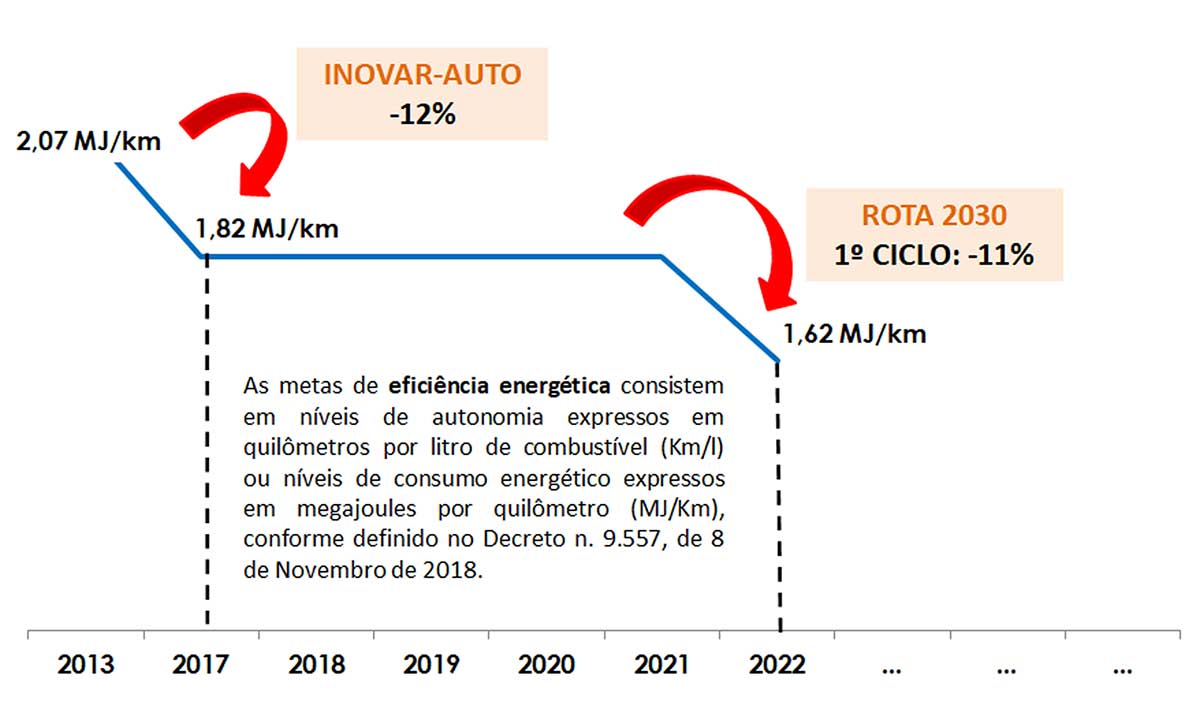
- To market vehicles in Brazil, the manufacturer or importer must comply with the mandatory goal of energy efficiency in your vehicle fleet, as calculated by the mathematical expressions provided for in Decree n. 9,557/2018.
- The brand/model/version that achieves the energy consumption of the additional target, calculated by the mathematical expressions provided in Decree n. 9,557/2018, will be entitled to a rate reduction of 1 or 2 percentage points (%) of the IPI.
- Example: For a vehicle with a mass of 1,121 kg
O Mandatory minimum target to be achieved: 1.6201 MJ/km;
O Minimum target for requesting a 1 pp reduction in IPI: 1.5286 MJ/km;
O Minimum target for requesting a 2 pp reduction in IPI: 1.4500 MJ/km
Vehicle security
One of the pillars of the Rota 2030 Program is to gradually increase the levels of structural performance and assistive technologies for driving vehicles sold in Brazil.
Manufacturers and importers must adopt at least 65% of Group A devices in their fleet in 2022, according to the calculation provided for in Annex IV of the Decree. The minimum percentage grows to 75% in 2023, and 5 percentage points each year through 2026.
Vehicles that, as standard, offer 100% of the items in group A and at least six in group B or C, will be able to obtain 1 percentage point of discount on the IPI, as long as they reach the energy efficiency target.
Group A
- Side Impact Test
- Stability Control System (ESC)
- Vehicle side direction indicator
- Daytime running lamp
- Driver driver unfastened seat belt warning (SBR)
- Emergency Stop Signal (ESS)
- Alert or rear view system (camera or audible warning)
Group B
- Post side impact
- Pedestrian protection
- Automatic emergency braking system – mobile obstacle
- Automatic emergency braking system – fixed obstacle
- Lane departure warning system (LDWS)
- Front impact – vans and utilities
Group C
- Automatic emergency braking system – pedestrians
- Automatic emergency braking system – cyclists
- Lane keeping assistant (LKAS)
- Driver drowsiness or distraction detection
- Adaptive cruise control
The Brazilian Vehicle Labeling Program (PBEV), created in 2008, is coordinated by INMETRO and provides information on the performance of products, considering attributes such as energy efficiency, noise and other criteria that can influence the choice of consumers, who will thus be able to make more informed purchasing decisions. It also stimulates the competitiveness of the industry, which will have to manufacture increasingly efficient products. For more information, consult the INMETRO website through the link:
http://www.inmetro.gov.br/consumidor/tabelas_pbe_veicular.asp
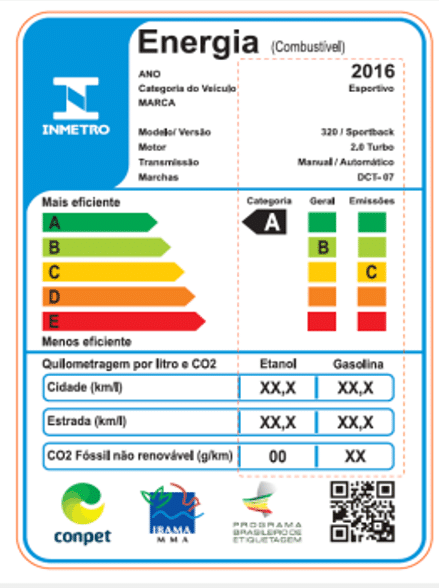
Considering the continuing need to improve the safety of vehicle occupants and other road users, CONTRAN has published several regulations in recent years. Recently, CONTRAN Resolution No. 717/17 established a schedule of technical studies for the regulation of vehicle safety items for various categories of vehicles.
The tables below show the technological evolution of the security requirements implemented in the last five years and already foreseen for the next ten years.
Implementation of safety requirements – Light Vehicles
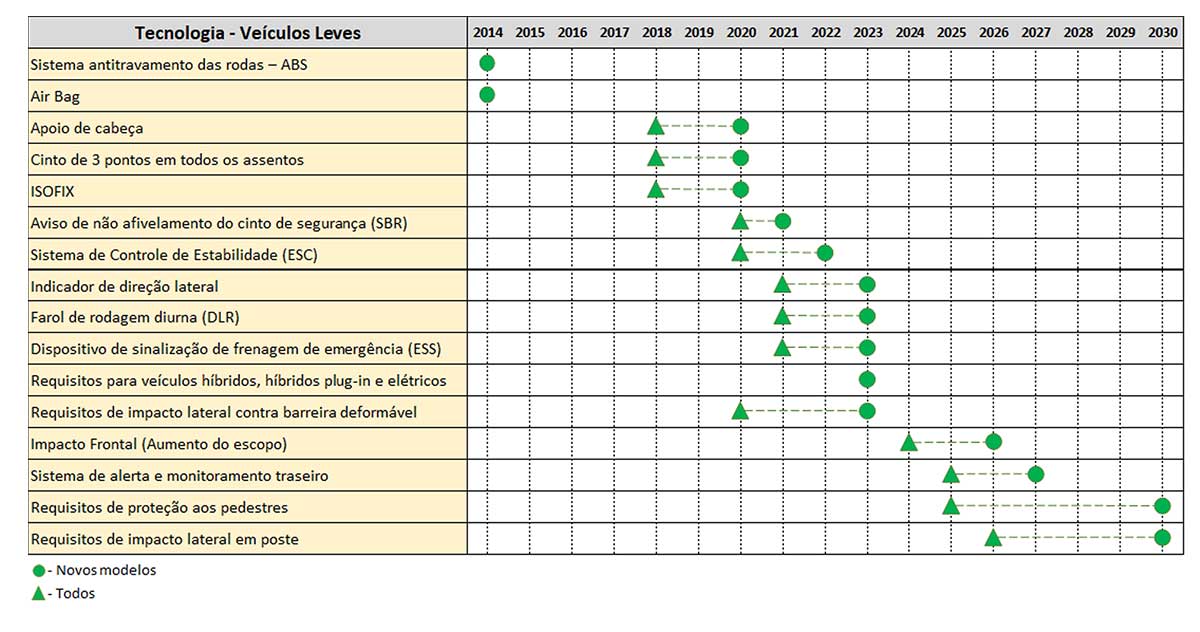
Implementation of safety requirements – Light Vehicles
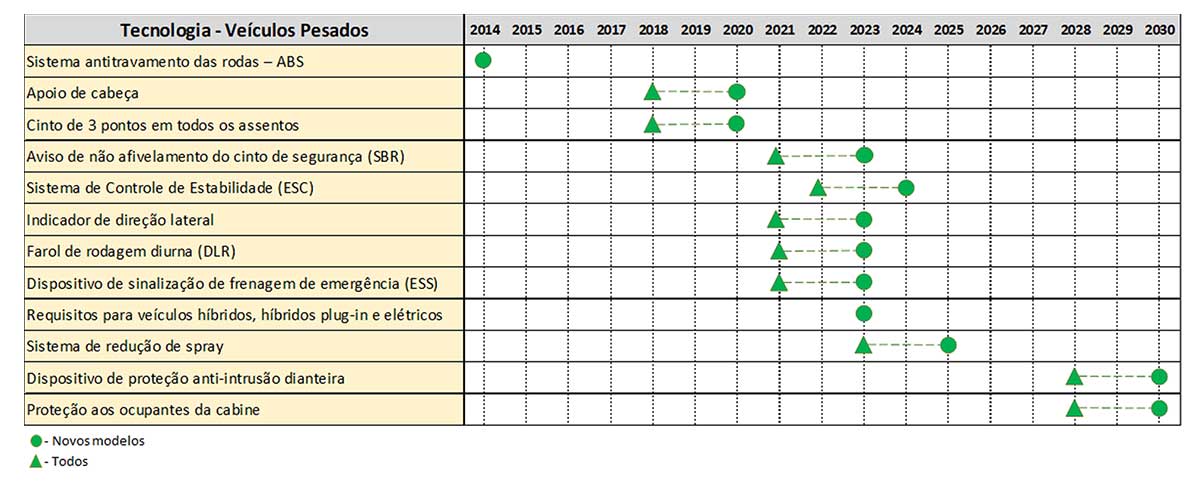
The Air Pollution Control Program by Motor Vehicles (PROCONVE) was established on a national basis by CONAMA Resolution No. 18, of June 6, 1986. Among the Program’s objectives are:
I. Reduce the emission levels of pollutants from motor vehicles;
II. Promote national technological development;
III. Create inspection programs for vehicles in use;
IV. Promote popular awareness of vehicle pollution;
V. Establish conditions for evaluating the results achieved;
VI. Promote the improvement of the technical characteristics of fuels.
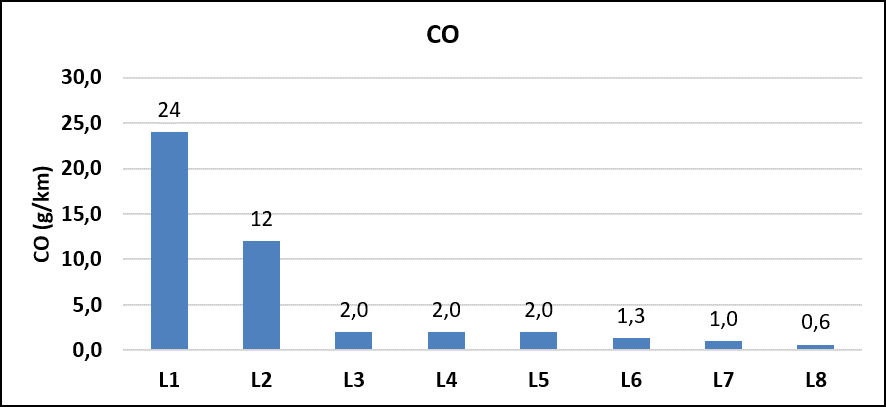
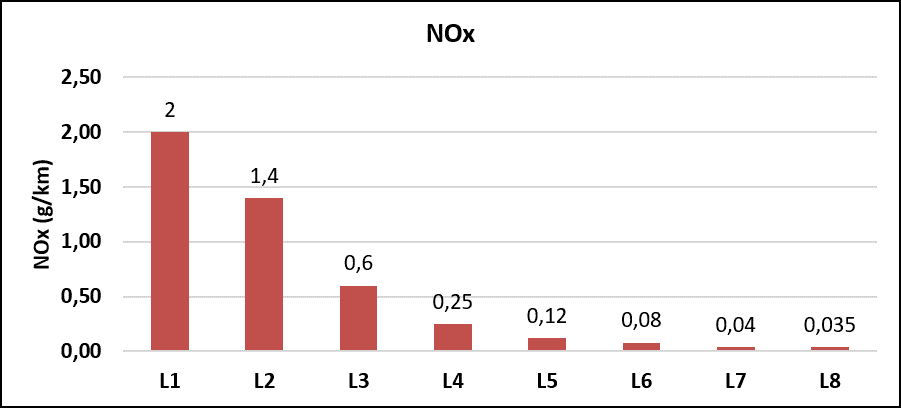
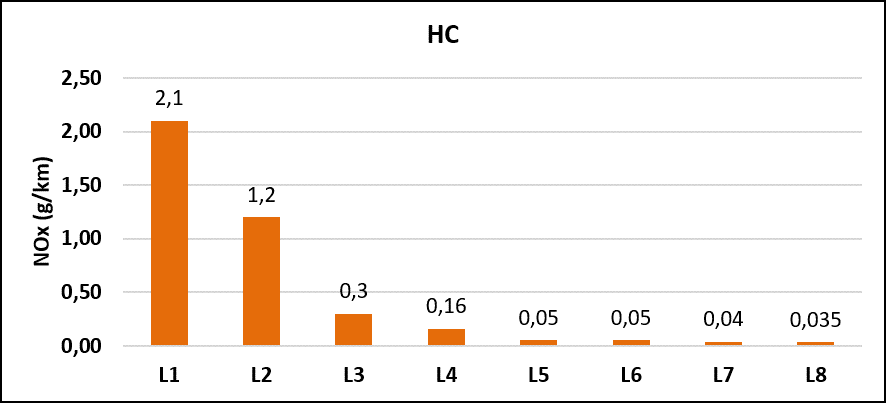
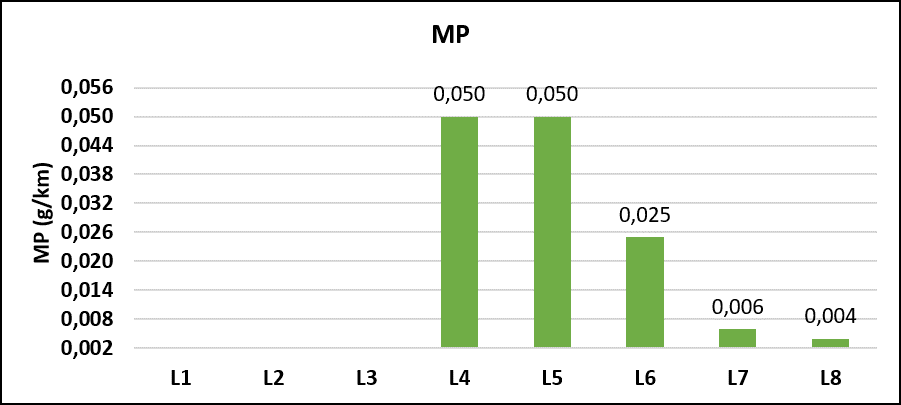
To control the emission of pollutants from these vehicles, they were staggered into the following phases and according to the schedule below:
- Light vehicles: L1: 1988; L2:1992; L3:1997; L4: 2007; L5:2009; L6: 2015; L7: 2022; L8:2025
PROCONVE Resolution: CONAMA Resolutions No. 18/1986, 315/2002, 415/2009 and 492/2018
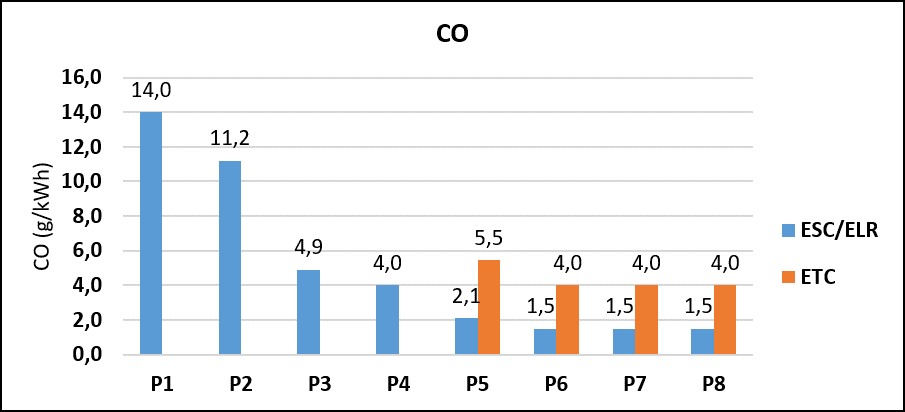
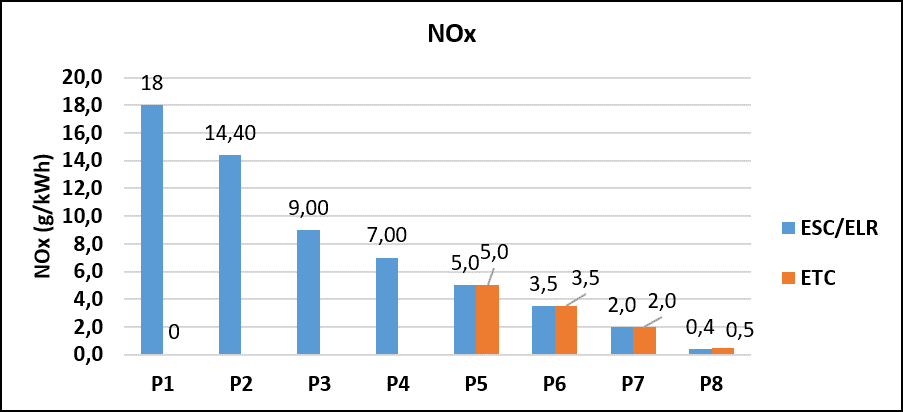
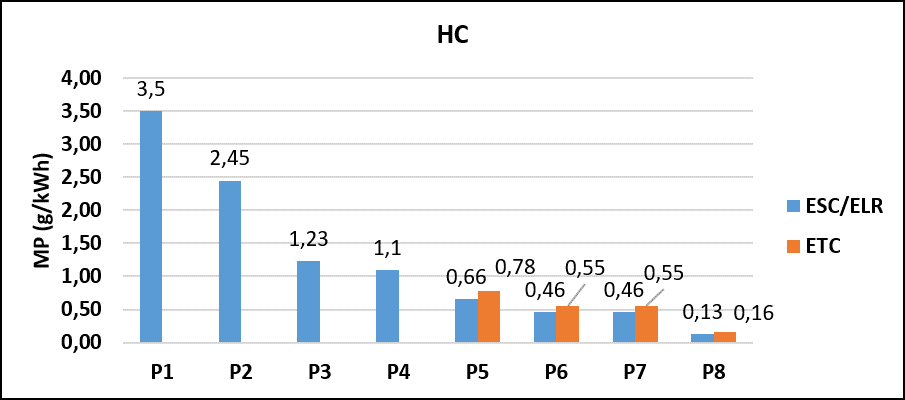
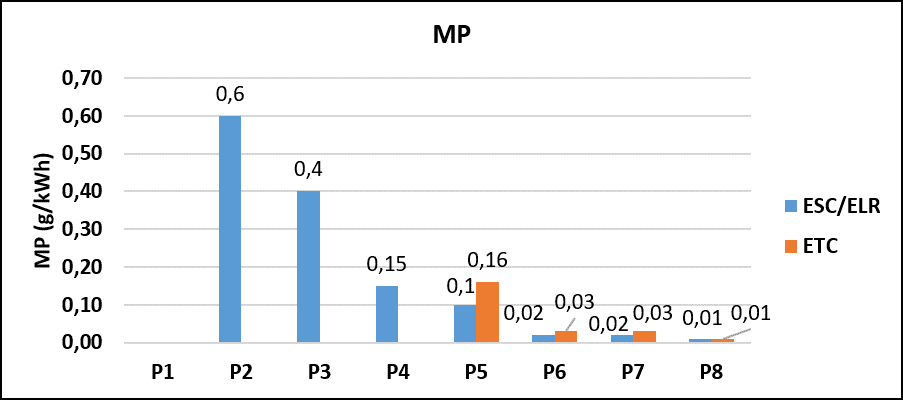
- Heavy vehicles: P1: 1989; P2: 1996; P3: 2000; P4: 2002; P5: 2006; P6: 2009; P7: 2012 ; P8:2022
PROCONVEResolution: CONAMA Resolutions No. 18/1986, 08/1993, 315/2002, 403/2008 and 490/2018
Reduction of vehicular pollutant emissions – PROCONVE Light vehicles
Reduction of vehicular pollutant emissions – PROCONVE heavy vehicles
Otto Cycle Emissions
AGRALE | BMW GROUP | FIAT | FORD | GENERAL MOTORS | HONDA | HYUNDAI | CAOA
IVECO | MERCEDES-BENZ | MITSUBISHI | NISSAN | PEUGEOT CITROËN | RENAULT
SCANIA | TOYOTA | VOLKSWAGEN | MAN | VOLVO
Diesel Cycle Emissions
AGRALE | DAF | FIAT | FORD | GENERAL MOTORS | HONDA | HYUNDAI | CAOA
INTERNATIONAL | IVECO | MERCEDES-BENZ | MITSUBISHI | NISSAN